

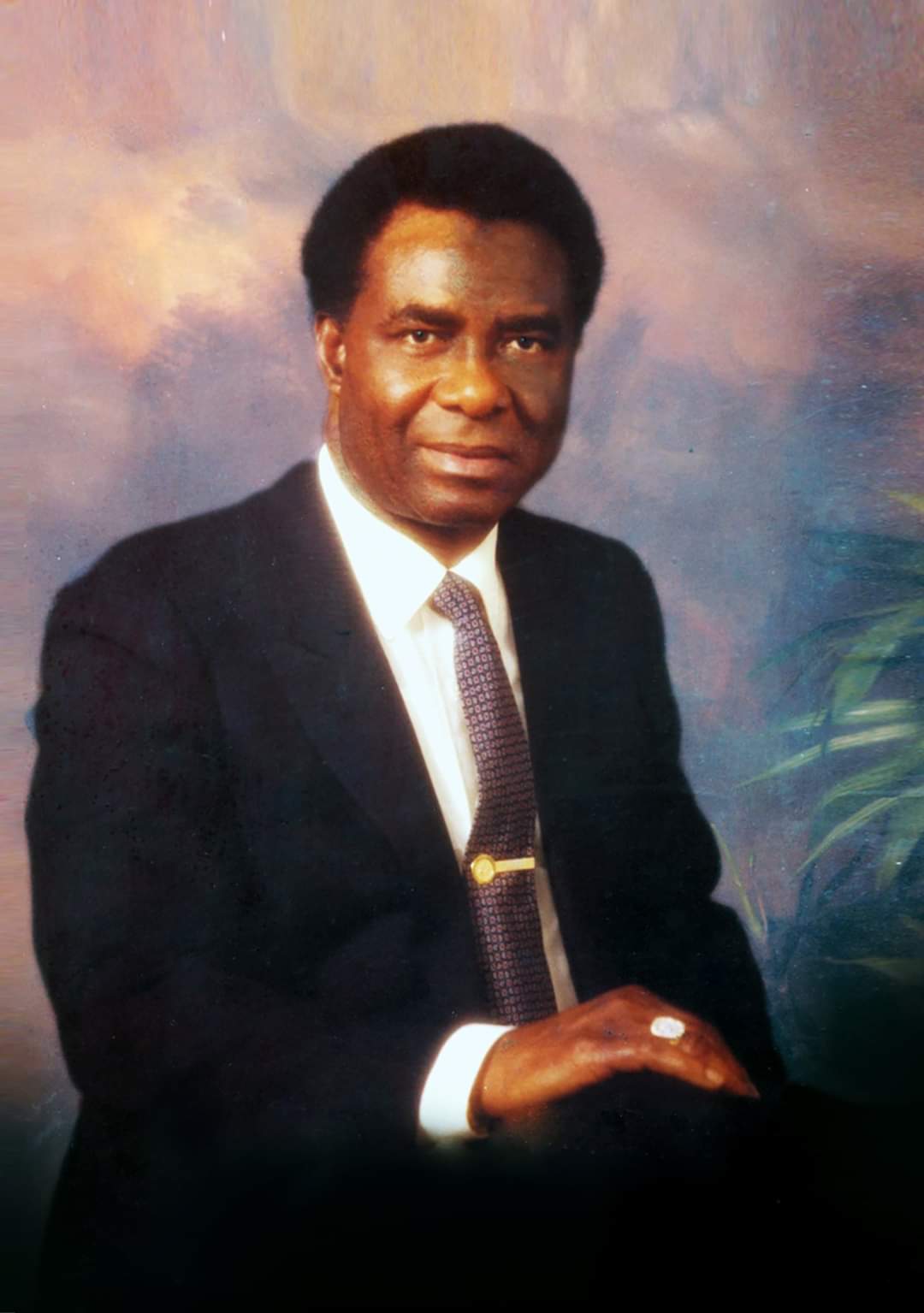
There are stars who will bestride the horizon and shine on the lives of the people with such great intensity and monumental impact that they will remain unforgettable. Years after they are gone, their sterling and extraordinary deeds will never evaporate. Rather, they will continue to glitter and refresh the memories, from one generation to another. Such stars will constantly remain unforgettable, fired and flourished by the flurry of their excellent achievements, exceptional deeds and remarkable impacts. So it has become with the name, Collins Obih, in Dikenafai and amongst the people of the community, even after his exit thirty-five years ago on May 9, 1990.
Ironically, Collins Obih had humble beginnings, coming from a modest background. His father, Mazi Obineche Dike and mother, Mama Onwubuo, were peasant farmers. None of his parents, like virtually all their contemporaries in Dikenafai, had the opportunity and privilege of formal education. They merely eked out a living from farm work. Therefore, Collins was not born or fed with the silver spoon.
However, very early in life, he began manifesting signs that portrayed him as a special and gifted child. He started schooling at a very tender age without the knowledge and blessing of his parents. In fact, when they discovered that their only son, immature as he was, had been following other school children in their neighbourhood to school, they frowned at this, and made frantic attempts to prevent him. Young Collins remained adamant. He continued to stealthily follow other children to St. Mary’s Catholic School, in Dikenafai.
Meanwhile, notwithstanding that he was not of school age, he was exceptional in learning. His brilliance was quite unprecedented, eliciting the attention of the school authorities. This was how they eventually got his parents into accepting his educational aspiration. Nevertheless, his parents’ lack of means, and his father’s indifference to his educational training created hiccups for young Collins to reach for the sky in his academic career. He could only struggle to complete Standard Six with exemplary performances. At both St. Mary’s Catholic School, Dikenafai and St. Gregory’s Catholic School, Amaigbo, where he attended his primary education, he held the record of never coming behind any pupil in class. He performed outstandingly well, claiming for himself the first positions in all the examinations.
A BRIEF STINT IN THE MILITARY
After his Standard Six education, his life as a self-made man began to manifest, to gradually take firm root. Late Chief John Ezurike from Umuafai, Dikenafai, first took him to Zaria, where he resided and worked in the colonial army as a steward to a British officer. Their stay in Zaria with Collins was very short, as Ezurike’s boss was transferred to Lagos not long after their arrival. Immediately after their relocation to Lagos, Collins Obih was enlisted as a trainee steward under John Ezurike. After his training as a steward, the authorities assigned him to a British soldier, Corporal Hegan, who was serving in the Nigerian segment of the West African Frontier Force (WAFF).
Soon after this, Collins enlisted fully in the army in line with the new policy at the time, converting to a clerical staff. He attended the professional training at Abalti Barracks during which he excelled, as always. At the end of the training, he was deployed to the Army Headquarters in Apapa as Confidential Secretary to the General Officer Commanding the Nigeria Regiment, Major General Welby Everald. By dint of hard work, total commitment to excellence and resilience, the young soldier attracted so much attention of his superiors and colleagues, and he rose speedily in rank, becoming a Sergeant-Major within a short span.
When he was promoted to the rank of Sergeant-Major, he was redeployed to the Office of the Camp Commandant in-charge of Administration as Chief Clerk. Here, Captain Boss, who was the Paymaster General of the Army was his immediate boss. While serving in this office, Collins became immensely popular.
Before his discharge from the army for reasons which bordered on his personal conviction, he had gained popularity amongst the people of Dikenafai, as well as those from Orlu and Okigwe provinces and beyond, who were residing in Lagos. He worked briefly in the office of the Nigeria Ex-servicemen Welfare Association (NEWA), immediately after his exit from the colonial army.
A BANKING COLOSSUS
What turned out to be an eminent and pace-setting banking career for Collins Obih began with his employment as a Senior Clerk in Barclays Bank, which later became known as Union Bank. Prior to this time, he had been developing himself academically by obtaining the Cambridge General Certificate of Education through correspondence. This was accompanied with a Diploma Certificate in Accounting. Hence, after joining Barclays Bank, it did not take long before he gained promotion to the position of a Banking Officer. He got transferred to the bank’s main branch in Port Harcourt following this promotion.
His impressive work rate, professional skills and ethics were becoming manifest to anyone who had contact with him. It was therefore not surprising that, one of the newly founded indigenous banks known as the Pan Nigerian Bank, offered him employment as Branch Manager in Port Harcourt. Thus, he left Barclays Bank to join the Pan Nigerian Bank.
Unfortunately, his career in Pan Nigerian Bank would not be for a long time. Developments in the industry had resulted in the closure of many indigenous banks in the country, including the Pan Nigerian Bank. Hence, his banking career terminated abruptly.
However, it did not take long for another opportunity to beckon at Collins to return to the banking industry. This time, it was the African Continental Bank (ACB) founded by the doyen of Nigerian independence struggles, Dr. Nnamdi Azikiwe, that offered him employment opportunity. Thus, in 1953, Collins Obih started his eminently successful and most remarkable career in the bank, as Senior Accountant. His outstanding performance soon earned him elevation to the position of the bank’s Chief Accountant.
The events of the Foster Sutton Tribunal instituted by the colonial government to probe allegations of financial impropriety levelled against Dr. Nnamdi Azikiwe were to bring to public focus the profound professional skills of Collins Obih. Major stakeholders within and outside the Eastern Region were exposed to the reality that amongst the top personnel of the ACB, Collins had incomparable professional knowledge and qualities. As the dust generated by the outcome of the Foster Sutton Tribunal was about to settle, he was offered scholarship to study banking at the Regent Polytechnic in London.
At the end of his study, he returned to his job and was redeployed to London as the pioneer accredited representative of the bank. Before his appointment, the activities of the branch were handled by a third party agent-bank. Upon assumption of office, Collins Obih brought his managerial expertise to bear on the branch and the popularity of the bank began to soar very high. His impact as the pioneer Manager of the London Branch of the ACB was quite profound. The clientele rose astronomically not only amongst the Black population, but the conservative and racially-conscious White people who came freely to do business with the bank. ACB was now enjoying significant international reach and appeal.
As the bank’s London Branch was performing excellently under Collins Obih, he was promoted to the position of Assistant General Manager and consequently redeployed to the bank’s Head Office in Lagos, Nigeria. Eventually, after the exit of the bank’s General Manager, Mr. F. S. McEwen, Collins Obih assumed the office on acting capacity. As his appointment was about to be confirmed by Dr. Michael Okpara, the Premier of Eastern Region, owners of the bank, the military putsch of 15th January, 1966, took place. It was Col. Chukwuemeka Odumegwu Ojukwu who took over the reins of power as the Military Governor of the region that ultimately appointed Collins Obih as the substantive General Manager of the African Continental Bank (ACB).
Meanwhile, the deteriorating political crises at the time exerted severe consequences on the transformational agenda of Collins Obih aimed at firmly repositioning the ACB as the foremost indigenous bank in the country. As the crises raged on, culminating in a fratricidal war, the management of the bank had to be split into two with Collins Obih assuming the headship of the Management Committee with Head Office in Port Harcourt while Mr. S. O. A. Sule headed the Lagos-based Management Council. Under this arrangement, Collins Obih was charged with the management and supervision of the bank’s branches in Eastern Region and London while Sule was saddled with overseeing the branches in all other parts of Nigeria.
Throughout the civil war, Collins Obih spearheaded the management of Biafra’s foreign exchange transactions leveraging on the bank’s London Branch networks and facilities. It was largely through his exposure to the international financial corridors, as well as his financial management dexterity, that, Biafra enjoyed considerable foreign exchange earnings and support to facilitate the war efforts of the secessionist regime headed by General Chukwuemeka Odumegwu Ojukwu.
After the civil war ended in 1970, Collins Obih rolled out an elaborate blueprint for the stimulation of the economy of the country on the planks of robust, liberal financial packages designed to engender micro, medium and macro businesses as the driving forces. Meanwhile, commercial activities had been devastated and crippled completely throughout the Eastern Region during the war. The economy of the region was in comatose. Private and public buildings and institutions suffered severe bombardments from federal troops. A callous policy of the crass reduction of the pre-war savings and wealth of Biafrans had brought them to the very abyss of acute penury. By this policy, the people had been compelled to receive only a paltry £20 in exchange for all their money which they did not have the opportunity to exchange during the war. There was also the extremely hostile policy of forceful acquisition of estates owned by Igbo people outside Igbo land, declaring same as “Abandoned Properties.” The indigenization policy of the Federal Government by which Nigerians were authorised to acquire equity holdings in multinational companies soon after the war, when Igbo people were subjected to extreme state of poverty, all bore the glaring testimony of concerted efforts to consign the people to unmitigated hardship. Hence, as other Nigerians were grabbing ownership of multinational corporations, Igbos merely watched in their hopeless and helpless condition of state-induced destitution.
It was under this gruelling and agonizing situation of the Igbo man that Collins Obih rose to national eminence. He introduced an ingenious liberal lending strategy to empower cash-strapped Igbo people with business potentials to bounce back in their businesses. Through the Third Party Guarantee (TPG) credit policy, his bank availed any customer with viable business proposal loan facility of up to £10,000, without demanding for any stringent collateral security. All that was required of a loan applicant under the scheme was the recommendation or endorsement of a known customer of the bank as a guarantor. With this innovative generous loan policy, cash-strapped and poverty-stricken Igbos had unfettered access to business capital after the civil war.
Soon after the war, businesses were springing up across Igbo land. The hitherto battered economy of Eastern Nigeria became revamped and rejuvenated. The length and breadth of Igbo land began to witness commercial activities unprecedented in the history of the country. Industries sprang up here and there, even across rural communities, almost all owing their foundation and existence to the robust financial support of the ACB under the dynamic and innovative leadership of Collins Obih.
This was exactly how Igbo people revived their dead businesses after the civil war, and thereafter asserted themselves as the people in control of the country’s commercial business sector and informal economy. The impact of Collins Obih in this regard was so profound and unprecedented that one could hardly find any successful industrialist or businessman in the 70s and 80s in Igbo land, who did not enjoy support and assistance from the banking guru. People flooded his office on Broad Street, Lagos almost on a daily basis to receive his now legendary assistance in the form of his bank’s robust financial support or professional advice. It was such that his office became a melting pot of sort for Igbo leaders, businessmen and the intelligentsia. It was in his office that prominent Igbos conceived the idea of forming the apex Igbo sociocultural body, Ohaneze Ndi-Igbo. Hence, Collins Obih became popularly known as Ozo-Igbo-Ndu (meaning, Saviour of Igbo people).
It’s very important to remark that under Collins Obih the liberal lending facilities of ACB were extended to other Nigerians. Hence, the policy had tremendous impact across the length and breadth of the country. Apart from availing Nigerians of all ethnic groups the opportunity to benefit from the generous credit facilities of ACB, he also offered qualified professionals from across the country the opportunity to gain employment in the bank, even to top management positions. Through such policies, he was able to completely transform the image of ACB from a regional bank, previously founded and owned by one man, to a popular financial institution where every Nigerian was regarded highly to enjoy opportunities, privileges and services.
Before his retirement in 1978, he succeeded in taking the ACB to very great heights. He made the bank acquire the popularity and reputation as the People’s Bank by lowering its deposit rates to the barest minimum. The bank became one of the strongest in terms of assets ownership. He introduced the policy of the bank’s ownership of its office buildings, and by the time he retired, the total value of its asset was put at N1b in 1978. That was worth over a whopping $1.5b at the time.
There were many other achievements credited to Collins Obih as the helmsman of the ACB. He established the bank’s Staff Training and Development Centre in Yaba, Lagos, and engaged a renowned British banker and scholar, Mr. F. E. Perry as the head. The centre ensured that the bank had well-trained and thorough-bred professionals as staff. He also founded the ACB Football Club of Lagos which was one of the prominent Division One clubsides in the country, to promote the image of the bank. The club produced a number of players who featured for the national team. These were some of the numerous initiatives brought into place by Collins Obih to ensure that the ACB remained a leading indigenous bank throughout his reign.
The fact that Collins Obih was the first Nigerian, nay West African to be vested with the fellowship of the Institute of Bankers (later known as the Nigerian Institute of Bankers, and presently as the Chartered Institute of Bankers of Nigeria), affirms his reputation as Nigeria’s foremost banking icon. This is more so, as he was the first indigenous President of the Institute of Bankers. He capped this enviable record by being President of the Nigerian Bankers (Employers’) Association, and bagging the fellowship of a number of other professional bodies.
In the course of his distinguished banking career, he served on the Panel for the Conversion of the Nigerian Building Society into a mortgage bank, culminating in the establishment of the Federal Mortgage Bank. Before the outbreak of the war, he was appointed as a member of the National Committee on the Review of Technical and Commercial Education in Nigeria. Finally, he was a member of the Council of the Lagos Chamber of Commerce, Industries and Mines and got involved in the management of some companies which are going to be highlighted as part of his business interests and activities. With the above highlights, there’s little or no wonder that, Collins Obih was not only a titan of the banking industry in the country, but was verily widely regarded as the father of Nigerian banking.
INVOLVEMENT IN POLITICS
During the struggle for independence from colonial Britain, Collins Obih had a brief stint in politics. Immediately after the abrupt end of his early banking career, he found solace in politics by joining the National Council of Nigeria and the Cameroons (NCNC), which later became known as the National Council of Nigeria Citizens, when Southern Cameroon was excised from Nigeria. As a young man then, he participated actively in the youth arm of the NCNC, which was more popularly known as the Zikist Movement, named after the founder and leader of the party, Dr. Nnamdi Azikiwe. Collins Obih was one of the frontline leaders of party’s youth wing. His political activities during the colonial struggle lasted for only a little while, as he opted soon to return to his more promising and satisfying banking career.
His retirement from the ACB in 1978 saw him return to full participation in political activities. He was one of the founders of the Second Republic dominant political party, the National Party of Nigeria (NPN). He contested for the party’s gubernatorial ticket in the old Imo State soon after his retirement from ACB. He lost narrowly in the primary election to Dr. Nwakamma Okoro. He eventually became a National Vice Chairman of the party and was subsequently appointed as Special Assistant to President Shehu Shagari, a position otherwise called Presidential Liaison Officer (PLO) for Imo State.
As the PLO, he and a few other top leaders of the party in the state attracted the Federal University of Technology, Owerri (FUTO). The university along with other federal projects in the state at that time were executed under his direct supervision in his capacity as the PLO. These included, the Federal Secretariat complex in Owerri, hundreds of Federal Housing units scattered across major towns in the state, Ultra-modern Post Office complexes and major federal roads.
During the 1983 general election, Collins Obih contested as the governorship candidate of the NPN, but lost to the incumbent Governor Sam Mbakwe. He challenged the outcome of the gubernatorial election in the state as pronounced by the Federal Electoral Commission (FEDECO), as the electoral umpire was then called. The military coup of 31st December, 1983, aborted his hopes of upturning the verdict of FEDECO using the statutory judicial channels.
BUSINESS INTERESTS
Collins Obih was unarguably a pragmatic and great financial management expert. He utilised his exceptional professional skills and uncommon exposure in the banking and finance subsectors of the economy to establish a number of businesses for himself and in partnership with some of his closest friends, including Igwe M. N. Ugochukwu, Nze Clement Maduako and Chief Engr. Emmanuel Iwuanyanwu, among others.
Though, he was directly and more prominently involved in the business of offering financial consultancy services, he also invested in other sectors of the economy. He was the Chairman of Kema Investment Group, a company which began business operations with the Kema Transport Service and later extended its tentacles to supermarket and poultry farming. Kema Transport Service was a road haulage firm that started business with fifteen trailers, increasing its fleet to fifty within a short time. His wife, Mabel, was the Managing Director of the company.
At various times, Collins Obih occupied different positions in several companies with interests in banking, insurance, manufacturing, agro-allied products, quarry, estate development and so on. He was Chairman, Transglobe Investment & Finance Co. Ltd as well as Managing Director and Chief Executive Officer, Sunlife Investment Ltd.
He was Director of the following companies: Universal Insurance Company Ltd (UNIC); Premier Brokers Limited; Biscuit Manufacturers Company (BISCO) of Nigeria Ltd; Crushed Rock Industries (Nig) Ltd and Hallmark Assurance Company Ltd. Others include Transhill Ltd; Hic Oil Co. (Nig) Ltd; Ideal Flour Mill Ltd; Ideal-Eagle Agro-Allied Ltd and Eastern Bulkcem Company Ltd, manufacturers of Eagle cement brand.
Besides his active involvement in these firms, he had substantial investments in quite a number of companies quoted on the Nigeria Stock Exchange.
In a nutshell, beyond his towering and intimidating attainments in the banking sector, Collins Obih was by every measure an accomplished businessman.
COMMUNITY DEVELOPMENT AND PHILANTHROPIC ACTIVITIES
This is a very interesting aspect of his outstanding life. He was instrumental to virtually all developmental efforts and strides in his community during his time. His impact was so huge and pronounced that Dikenafai was not known to have achieved any development project in his lifetime without him driving the process.
He became the President General of the apex town union, Dikenafai Improvement Association in 1965. Long before then, when he was serving in the colonial army, he showed keen interest in the activities of the newly formed body at the time, becoming its pioneer Secretary General.
Prior to the civil war, the association could not achieve any tangible development project in the community, but it succeeded in promoting peace and unity amongst the people, which was quite significant. Immediately after the war, Collins Obih started galvanizing and mobilising the people for the pursuit and realisation of his development agenda for the community.
Through his selfless efforts and sacrifice, the community began to witness and enjoy meaningful transformation. The secondary school, gigantic pipe-borne water scheme and electricity projects were accomplished by the people of Dikenafai through his leadership dexterity, his unprecedented financial support and the generous contributions of his numerous friends and associates from across the country. For example, his friend, Chief John Mandilas, a famous Lagos-based industrialist and business mogul, donated a brand new Volkswagen bus to the secondary school when it commenced academic activities in 1977. He got another close associate of his, Nze Clement Maduako to serve on the Board of Governors of the secondary school while he was Chairman of the Board.
He was the first sports philanthropist in his hometown, sponsoring the maiden football championship under the aegis of the Dikenafai Improvement Union, a tournament for branches of the union. He sponsored the annual football fiesta that held during the festive Christmas seasons for several years until his demise.
Perhaps, one of the greatest contributions of Collins Obih to his community was his impact on human development through the provision of employment opportunities for people of Dikenafai. Though many of them did not acquire higher education in those days, he ensured that his people enjoyed gainful employment opportunities. At some point, the community could boast of a sizeable number of bank managers facilitated by him.
As a true leader and patriotic son of Dikenafai, Collins Obih always stood by and behind his people in several other instances. When the Imo State government imposed levies on communities for the construction of the Imo Airport, he singlehandedly shouldered the share of his community. He did not want his people to bear the burden arising from such imposition. Similarly, at another time, the education authorities in Imo State gave the community the task of constructing science blocks in the premises of the secondary school in Dikenafai, as a precondition for its elevation to a Senior Technical School. Collins Obih came to the rescue by solely offering to sponsor one of the blocks while a premier social club in the community, the Dikenafai People’s Club of Nigeria took over the sponsorship of a second one.
In fact, his contributions to the community are legion. Literally speaking, they are almost inexhaustible. He conducted his unprecedented acts of charity and community development efforts quietly, without any fanfare.
Easily, he could be rightly regarded as the most illustrious and patriotic son of Dikenafai with the most impact on the people and community. This was why he was the first in the community to be conferred with an honorary Chieftaincy title. Undoubtedly, the prestigious Chieftaincy title of Ochiagha-Dikenafai was a demonstration of the people’s profound appreciation for his immense achievements and numerous contributions to the development of the community in particular, the society and nation in general. His beautiful wife, Mabel, was also honoured, by the appreciative community, with the title of Acharaugo-Dikenafai.
Perhaps, one of the greatest attributes of Collins Obih was his sense of humility and simplicity. Despite his Olympian attainments, he was simply at home with his kith and kin in Dikenafai. He was a boardroom titan, yet at home with his people; comfortable and relaxed in the company of his less-endowed kinsmen. Throughout his lifetime, particularly at the height of his great success and popularity, he never missed a single opportunity to spend the festive seasons amongst his people in his hometown. His uncompromising habit of visiting and staying in his hometown every Christmas and Easter periods was to offer his people the opportunity and privilege to reach him and to enable him participate in community development programmes and activities, as well as other social events lined up during those seasons. Everyone, including the villagers had unhindered access to his country house whenever he was home. He was that simple and easily accessible. He never exhibited the air of superiority over his people, notwithstanding that he was urbane and classy.
Besides Dikenafai, his hometown, Collins Obih’s philanthropic gestures were spread to several communities across Igbo land. Many communities sought for his magnanimous support to the diverse self-help development efforts and activities initiated by them. His numerous friends and associates who contributed financially and materially to development projects in Dikenafai equally extended invitations for him to support developmental strides in their own communities, and he strongly lived up to their expectations.
Apart from his immense support to a vast array of communities in their pursuit of self-help development initiatives and projects, Collins Obih extended his remarkable philanthropic gestures to countless individuals who constantly sought for his assistance in diverse areas. He offered tremendous support to people from across the country to pursue their educational careers, business interests, or to overcome numerous other challenges. He sponsored many Christians and Muslims to the Holy Lands for pilgrimage. The Muslims were mainly from the North and South West, as he had an extensive network of friends and acquaintances from across the country and beyond.
In undertaking all his philanthropic activities, he preferred to remain silent without stirring any undue public attention. One of his most monumental philanthropic acts was when Chief Chukwuemeka Odumegwu Ojukwu was granted state pardon by the Federal Government of Alhaji Shehu Shagari. The government had at the eleventh hour withdrawn from making any financial commitment to facilitate his eventual return to Nigeria. Collins Obih was the one who singlehandedly shouldered the cost of the chartered Boeing aircraft that flew Ojukwu back to the country from Cote d’Ivoire. Besides those who were directly involved with arrangements for the home-return of the prominent ex-Biafran leader, no one knew about this great contribution and sacrifice by Collins Obih. That was the way he displayed his considerable acts of philanthropy. He rendered so much help to people morally and financially without blowing his trumpet. Generally, he was a silent, but smooth and effective operator, creating huge impact around him without making any fanfare of his achievements and contributions.
LAST LINE
For three and a half decades after his death, having transitioned to the world beyond on May 9, 1990, Collins Kenneth Nnadi Obih (CKN), Ochiagha-Dikenafai, Akwaa-Akwuru Nwabosi and Ozo-Igbo-Ndu has remained the greatest patriot, incomparable hero and most illustrious son of Dikenafai. The love of his people for him is yet to evaporate; it remains strongly in the air. It could be felt by the constant reference to him in most circles formed by Dikenafai people. He remains an unforgettable name for his indelible and unprecedented impact on humanity and society.
Written by
Joachim OLUMBA (Retd CIS), KSJI
(Emetumba-Dikenafai & Omekannaya-Nchoke)