

By Stanley Okehie
The people of Umunakara Autonomous Community in Nwangele Local Government Area have pledged to abolish or reform harmful traditional practices that undermine human dignity, promote gender-based violence and threaten peaceful coexistence.
The community made the commitment following a three-day Cultural Norm Shift retreat organised by the Centre for the Right to Health, with support from the Ford Foundation, to address harmful cultural practices affecting women, girls and other members of the society.
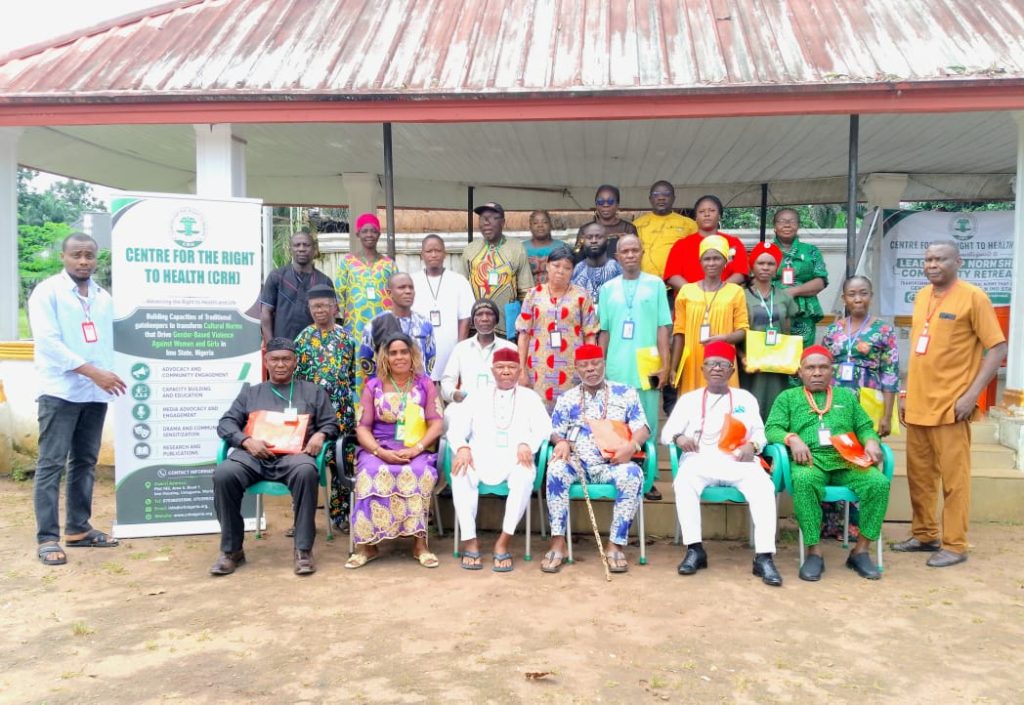
The traditional ruler of Umunakara Autonomous Community Eze Godwin Ejiogu, Kara 1 of Umunakara, represented by the Cabinet Chairman, Chief Emma Iwuala pledged the community’s support for initiatives aimed at promoting positive cultural change, peace and development.
Chief Iwuala said the retreat had exposed the dangers associated with some traditional practices, including Ita Ndu Ozu, a ritual in which an accused person is required to rub kolanut on the face after it has been inserted into the nostrils of a deceased person.
He noted that the practice could expose participants to infectious diseases, including tuberculosis, and pledged to work towards its eradication.
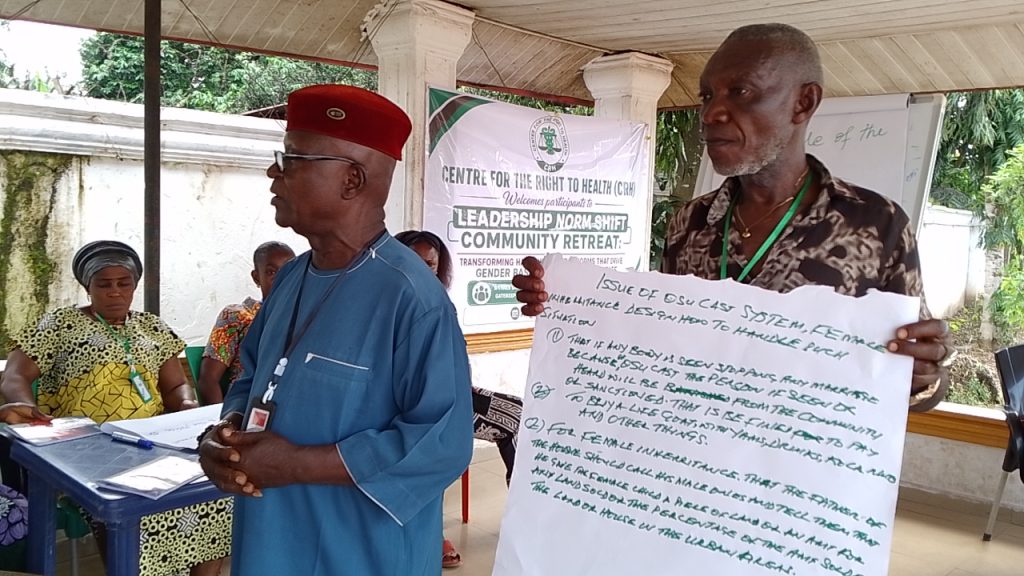
The Cabinet Chairman also condemned the practice of permanently banishing women on Eke market day, describing the retreat as an opportunity to understand its harmful consequences.
He promised that the community would adopt a more humane approach that would allow reconciliation and assured that other harmful practices would be reviewed in the interest of peace and progress.
He added that the traditional ruler would consider and approve the recommendations made by participants.
The Palace Secretary, Chief Magnus Agu said the retreat provided an opportunity to examine various cultural practices in the community and identify those requiring reform.
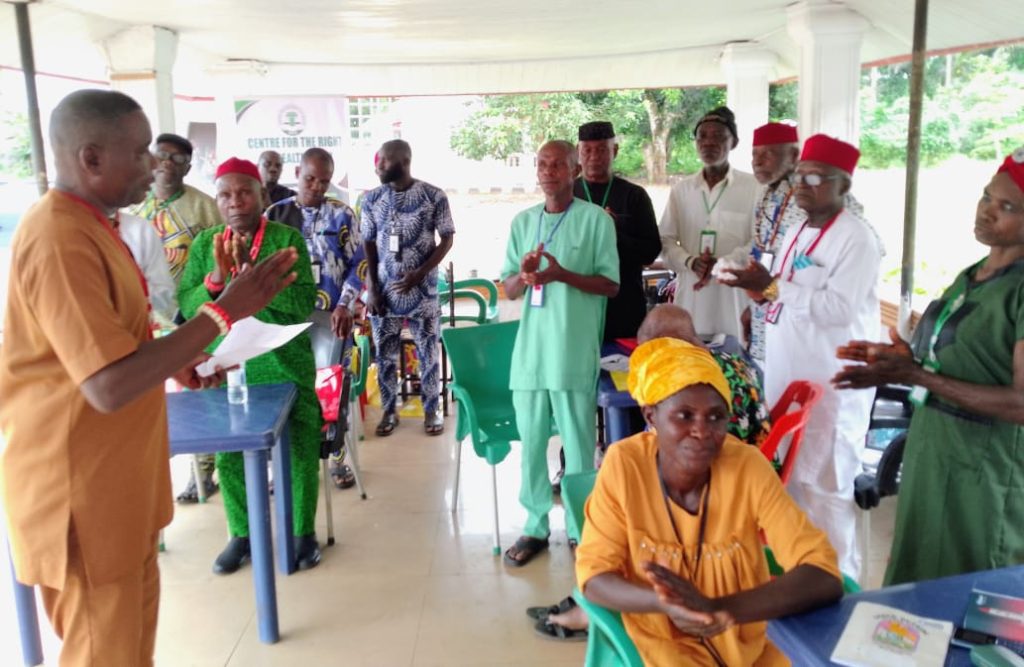
Chief Agu observed that victims of incest were sometimes subjected to dehumanising treatment, stressing that participants had been enlightened on the need to report crimes such as incest and rape to the police rather than subjecting victims to harmful traditional sanctions.
He assured that the community would embrace and implement the palace charter when developed.
The President-General of the community, Chief Adolphus Uchenna pledged to use community gatherings and other public forums to sensitise residents to the dangers of harmful traditional practices.
Chief Uchenna said the community would make judicious use of the proposed palace charter to promote acceptable cultural values while eliminating practices that violate human rights.
The Women President-General Mrs Catherine Ekpe commended the Centre for the Right to Health for bringing the initiative to the community, noting that women were often the most affected by harmful cultural practices.
She called for an end to the Osu caste system, which restricts marriage choices and advocated greater freedom for community members to marry partners of their choice.
Mrs Ekpe also highlighted the need for parents to educate their children on appropriate family relationships to prevent incest and other forms of sexual abuse.
She pledged to intensify awareness campaigns among women on harmful cultural practices and the implementation of the palace charter when developed.
For his part, a youth leader Onyedikam Ndubuisi said young people in the community would continue to support initiatives that promote peace and development.
He expressed confidence that the youths would play an active role in implementing the palace charter, adding that the retreat had broadened his understanding of harmful traditional practices and the need to adopt more humane approaches to cultural observances.