

By Stanley Okehie
The people of Dikenaodinma Autonomous Community, Avutu in Obowo Local Government Area have resolved to end all harmful traditional norms to pave the way for peace, progress and development in the community.
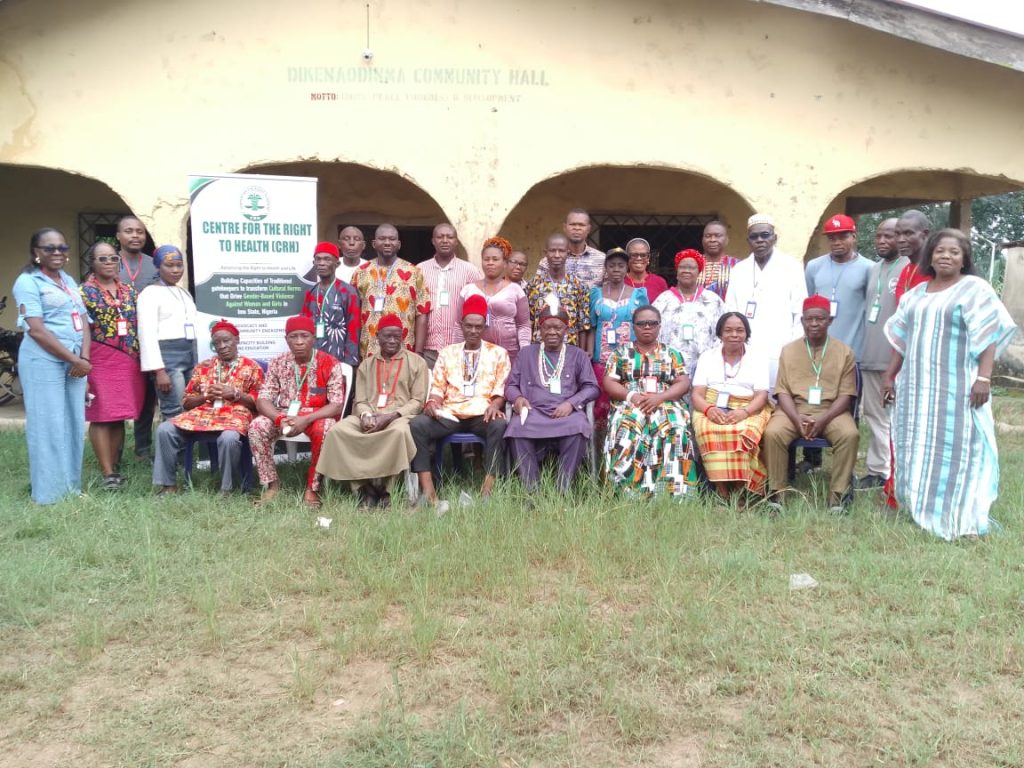
The resolution was reached during a three-day community retreat organised by a non-governmental organisation, Centre for the Right to Health, at the Dikenaodinma Community Hall.
The retreat, designed to move traditional leaders from awareness to action, from silence to accountability and from harmful customary responses to protective leadership practices, was attended by the traditional ruler of the community, Eze Dominic Obodo; Ndi Nze na Ozo; Councils of Chiefs; Town Union Leaders; women and youth leaders.
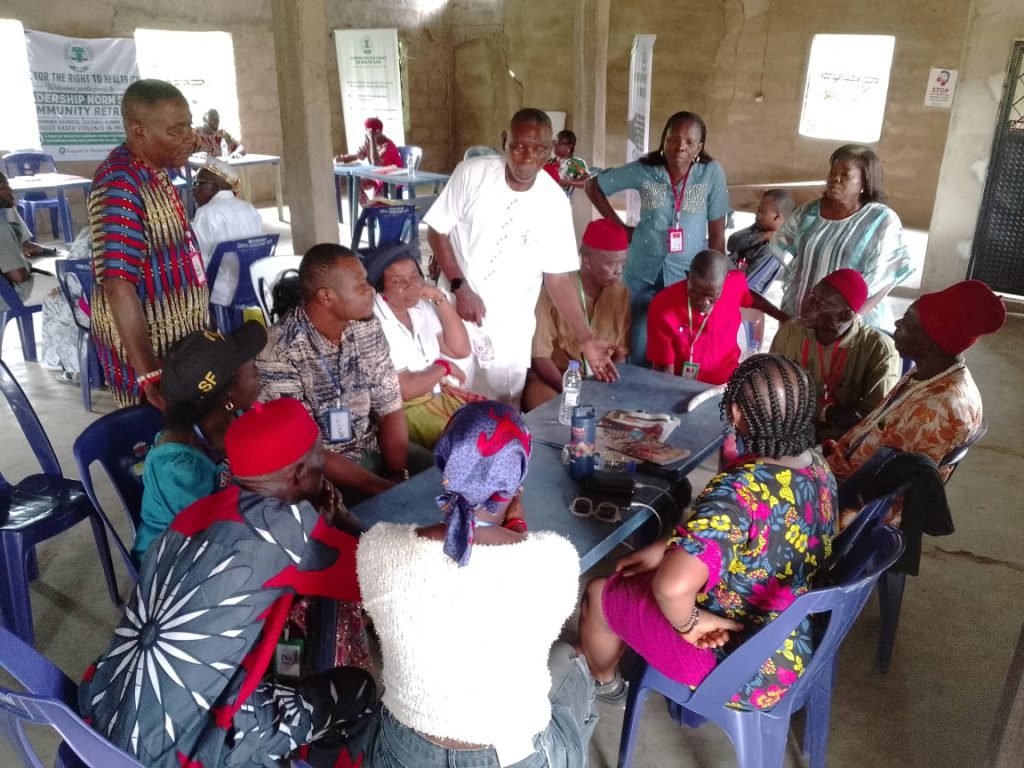
Participants identified child marriage, widowhood practices, male-child preference, intimate partner violence, female genital mutilation, rape, denial of inheritance and other harmful cultural norms as practices that facilitate gender-based violence in the community.
The traditional ruler of the community, Eze Dominic Obodo said he had learnt that women have equal rights with their male counterparts, particularly the right to inheritance.
He added that the retreat had exposed him to many harmful cultural norms practised in the community, noting that the knowledge gained from the retreat would help the community abandon such practices, especially male-child preference and harmful widowhood practices.
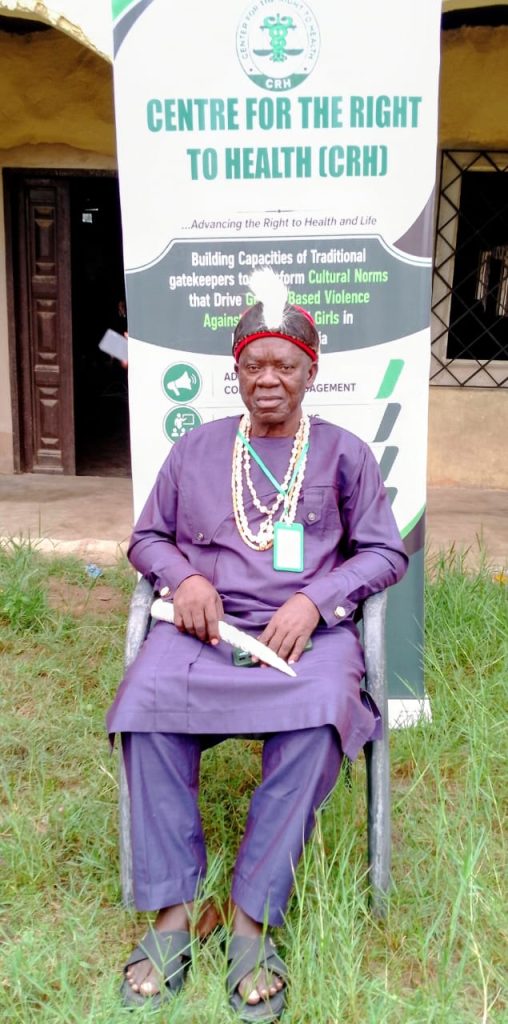
He committed to ensuring that the community would review harmful cultural norms that drive gender-based violence, stressing that such practices no longer serve the wellbeing of the community.
The Woman Leader of the community Mrs. Ogwuegbu Celine cited two cases of gender-based violence—rape and intimate partner violence—that occurred in the community but were poorly handled due to a lack of knowledge.
She noted that the retreat had taught her how to handle such cases and promised to immediately convene a meeting of women in the community to step down the training.
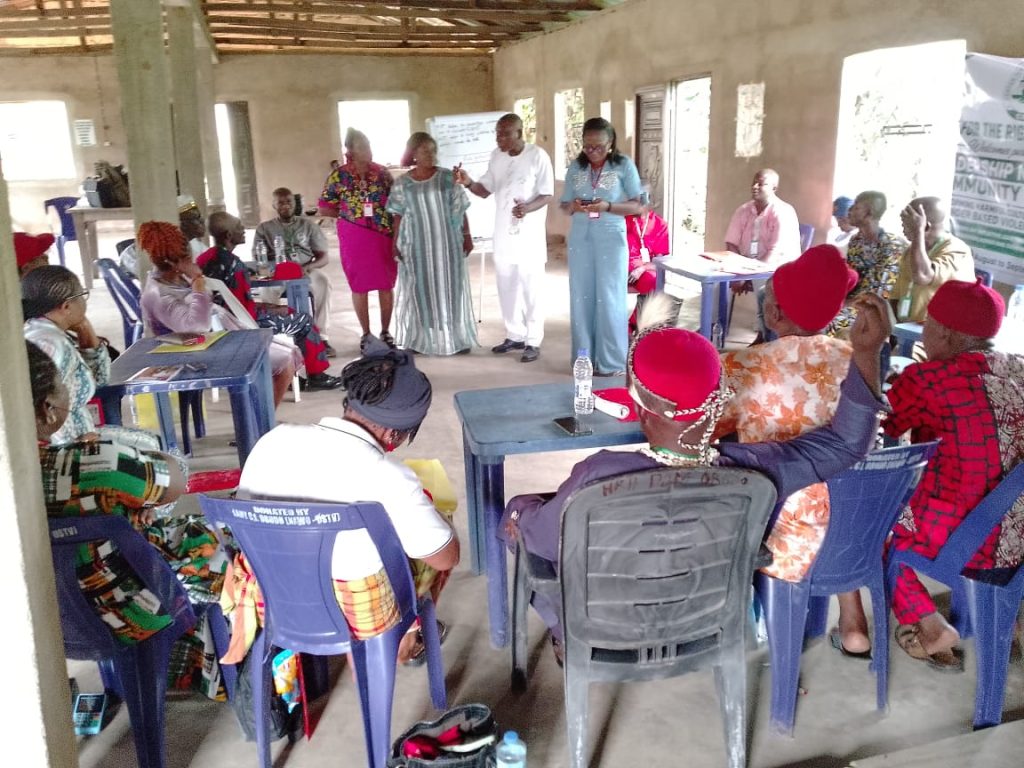
Nze Paulinus Uwaleme said stealing, rape and sexual assault were prevalent in the community and were often poorly handled, as perpetrators did not receive commensurate punishment.
He said the retreat provided valuable insights into how such cases should be handled.
The Community Youth Leader Comrade Obinna Nwoke said persons with disabilities should be treated with equal rights, promising to support safe referral systems and work to replace harmful practices with protective traditions.
Earlier, the Programme Officer of the Centre for the Right to Health, Mrs. Colette Bennett explained that the organisation was implementing a project funded by the Ford Foundation, aimed at transforming cultural norms that contribute to violence against women and girls in Imo State.
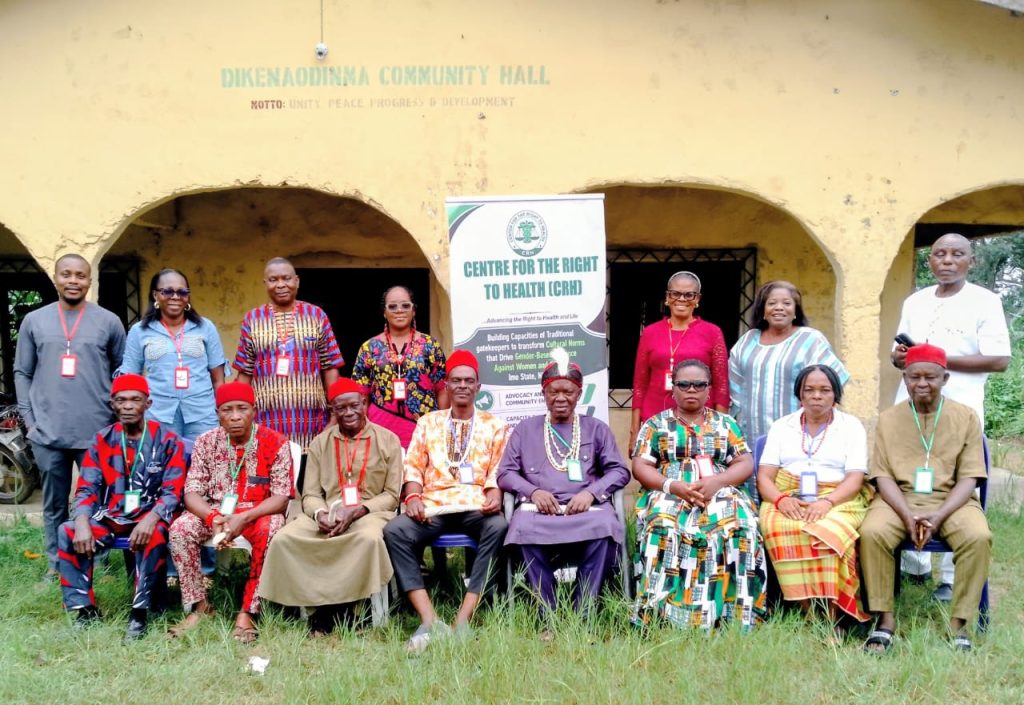
She said the retreat would take place in nine communities across five local government areas to examine beliefs and norms that are harmful to women and girls, with a view to transforming them positively and reducing violence against women and girls.
According to her, the retreat would provide the community with an opportunity to develop a Palace Charter that affirms tradition as a living system that preserves dignity, justice, mutual respect and communal harmony.
She added that storytelling and drama would be deployed as strategies to sensitise other members of the community, assuring that the organisation would scale up the sensitisation to other communities in Imo State.
A resource person, Mrs. Ogechi Ikeh, enlightened participants on referral pathways for reporting cases after identifying the harmful cultural norms affecting the community.
She expressed satisfaction that the retreat would lead to a transformation from harmful norms to practices that promote dignity, gender justice and human rights.
The three-day retreat marks a shift from passive acceptance to active reform, with community leadership now positioned to drive the process of positive norm change.